I - Lunar-like
There was no crunch underfoot. The ground wasn't right, not in the quicksand kind of way, but a soft, fluffy, beachy way in the high desert. It felt like the earth was giving me a gentle foot-hug with each step. My lug-soled footprints stayed put, which was why eight of us were instructed to spread out on this protected woodland preserve in Central Oregon.
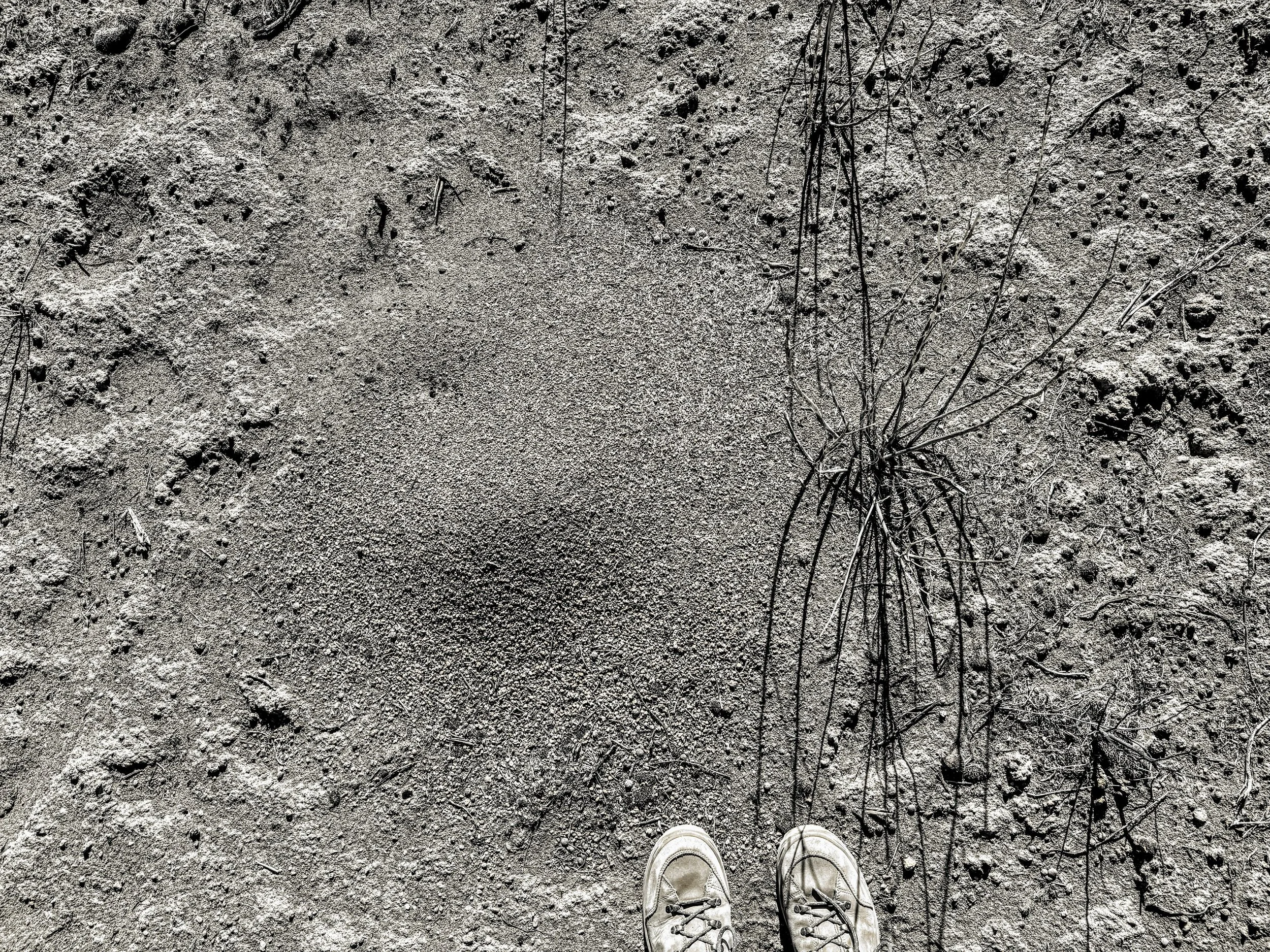
Self-portrait with Owyhee harvester ants and skeleton plant. Old-growth juniper woodlands. Central Oregon. June 2026.
A colony of Owyhee harvester ants was hard at work. (Note: You don’t camp next to them, unless you enjoy pugnacious, aggressive, and venomous little warriors.) They evolved to get shit done and be together. Some colonies thrive for 30 years. One study east of here at Horse Ridge Natural Area found about 40 nests of Owyhee harvester ants. Each colony showed seed predation, enabling a transformation of 46,000 square meters of barren landscape. They re-engineered the landscape into barren zones. Grazing behaviors of sheep, cattle, and ants perform similar functions, just over different time scales.
——-
“No walking in a single-file line. Don’t follow each other," the Oregon State University forester said. “Any trail you see is from animals, not humans.”
At home on my parcel, I adore finding animal trails. I think of them as little wildlife highways. Order and sequence permeate all nature, not just humans' “ownership” of the planet to carve roads.
"Remember what you see,” she said, and vanished into the brittlebrush, sagebrush, and old-growth juniper woodlands off to the next rendezvous point by the open meadow.
Separately, we made our way across the preserve and looked down.
Sound came from the distant highway; tires pulsating speed on an overcast Saturday morning. I dressed for the whiplash weather on a summer day in Central Oregon: long underwear, rain-resistant pants, a puffy jacket with a hood, hiking boots, and a backpack. Just three days ago, it was 88 degrees F. I wore a tank top and shorts for trail running. Now the wind made it feel 38 degrees F.
What I also didn’t hear: birds. Didn’t see any either. This broke my heart. I kept my head down and stayed curious.
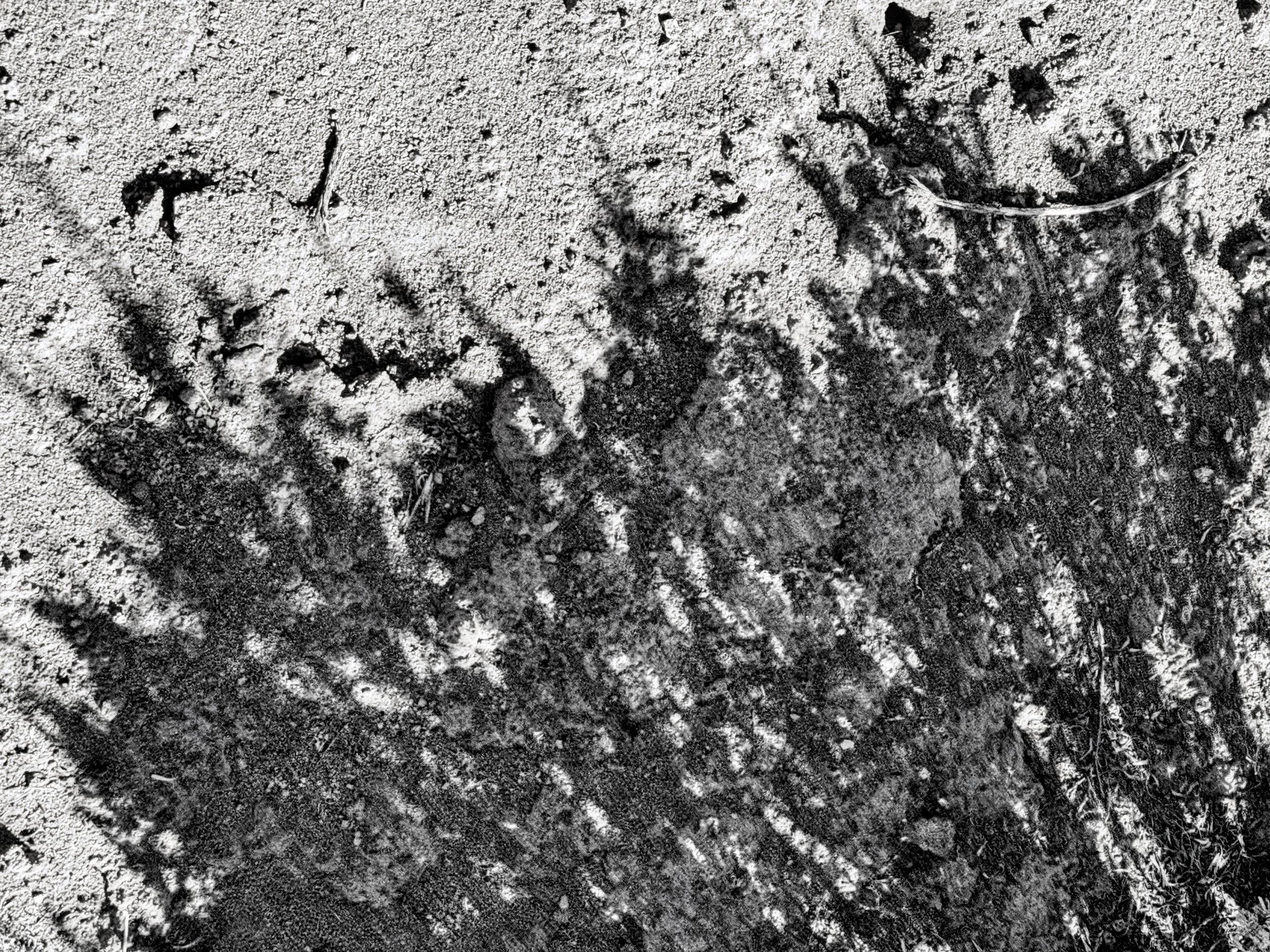
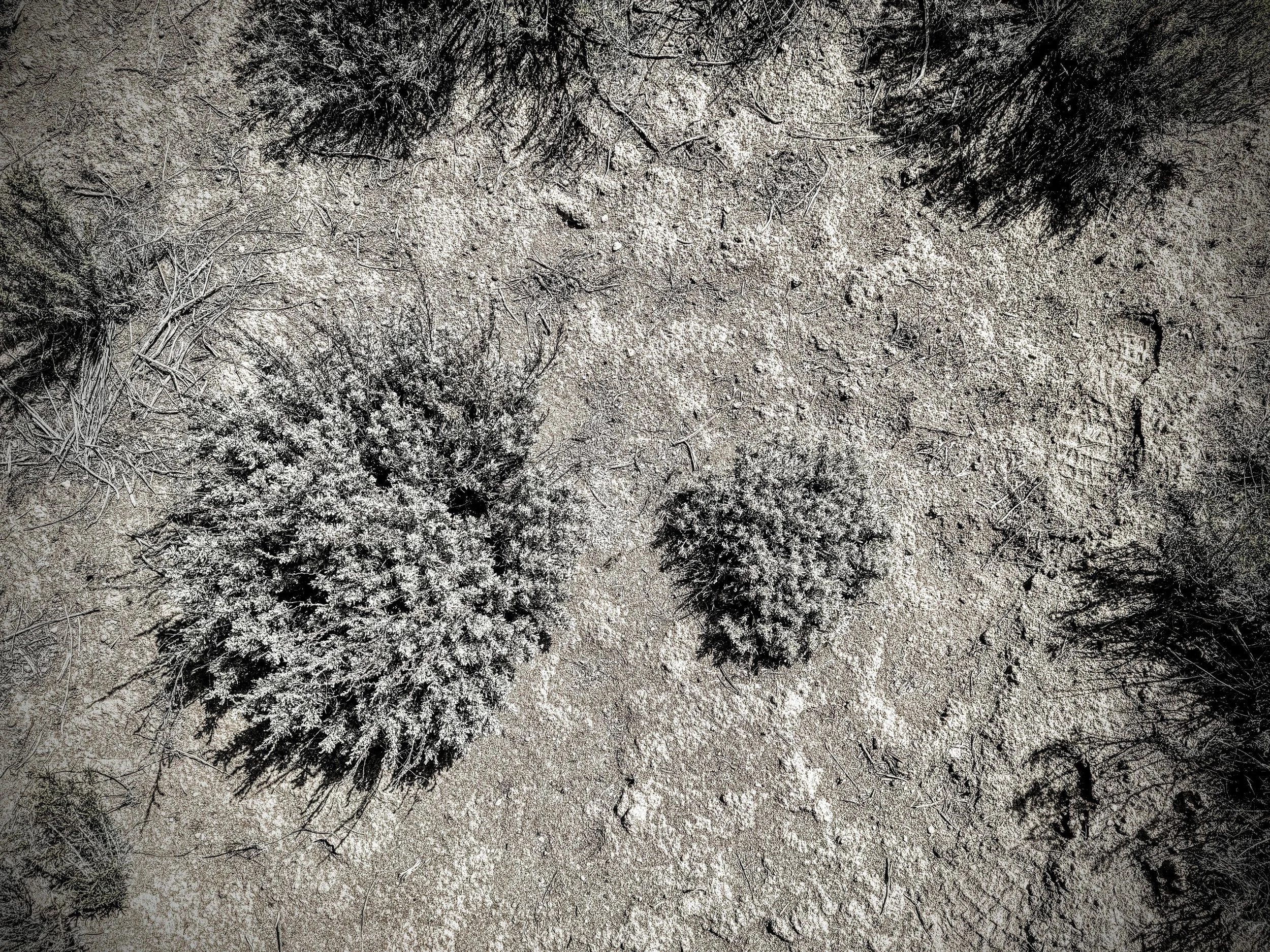
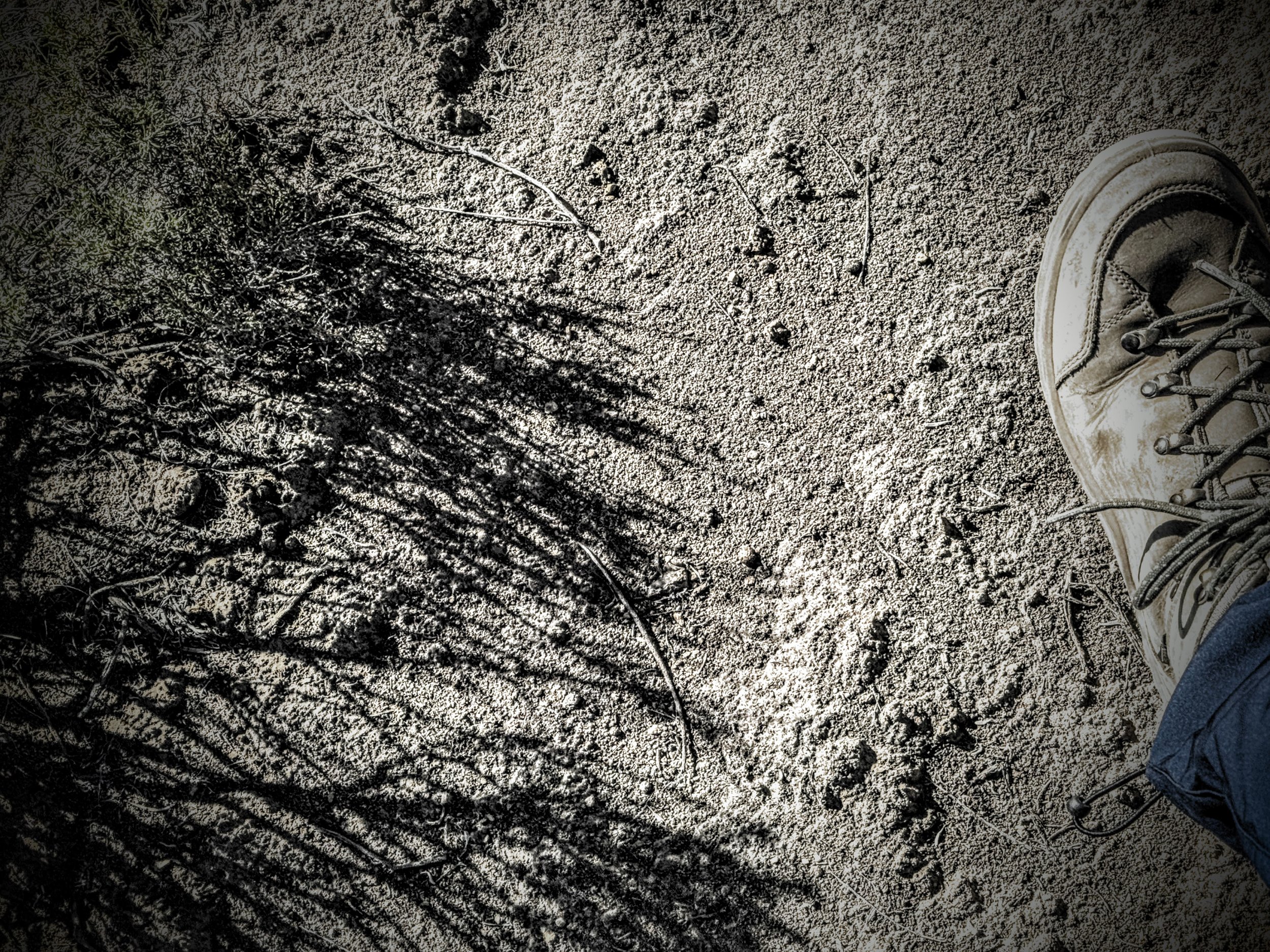
Caption: left to right are my photographs of the pumice province (i.e., pale, open, coarse, almost no organic layer visible). Old-growth juniper woodlands. Central Oregon. June 2026.
——
An older man in a sun hat and a CT scan scheduled for 11 AM, yelled to me, “Whadda ya suppose this scat is from?” We stood over the clump and bantered about wildlife scats.
The forester eventually came around and bent down. With bare hands, she broke apart the scat like I had seen her do earlier with a lemon butter cookie. She looked inside. She dropped it and brushed her hands off on her cargo pants, which had muted tribal salmon-silhouette iron-on patches. “Not sure. Gonna think about this one.” And she continued into the preserve.
This forester, with a septum ring and thick silver rings, WAS a former wilderness ranger who spent long stretches in the backcountry observing and analyzing what the land had to say. I hadn’t become her wild, yet, but I was thoroughly impressed with such rugged grace.
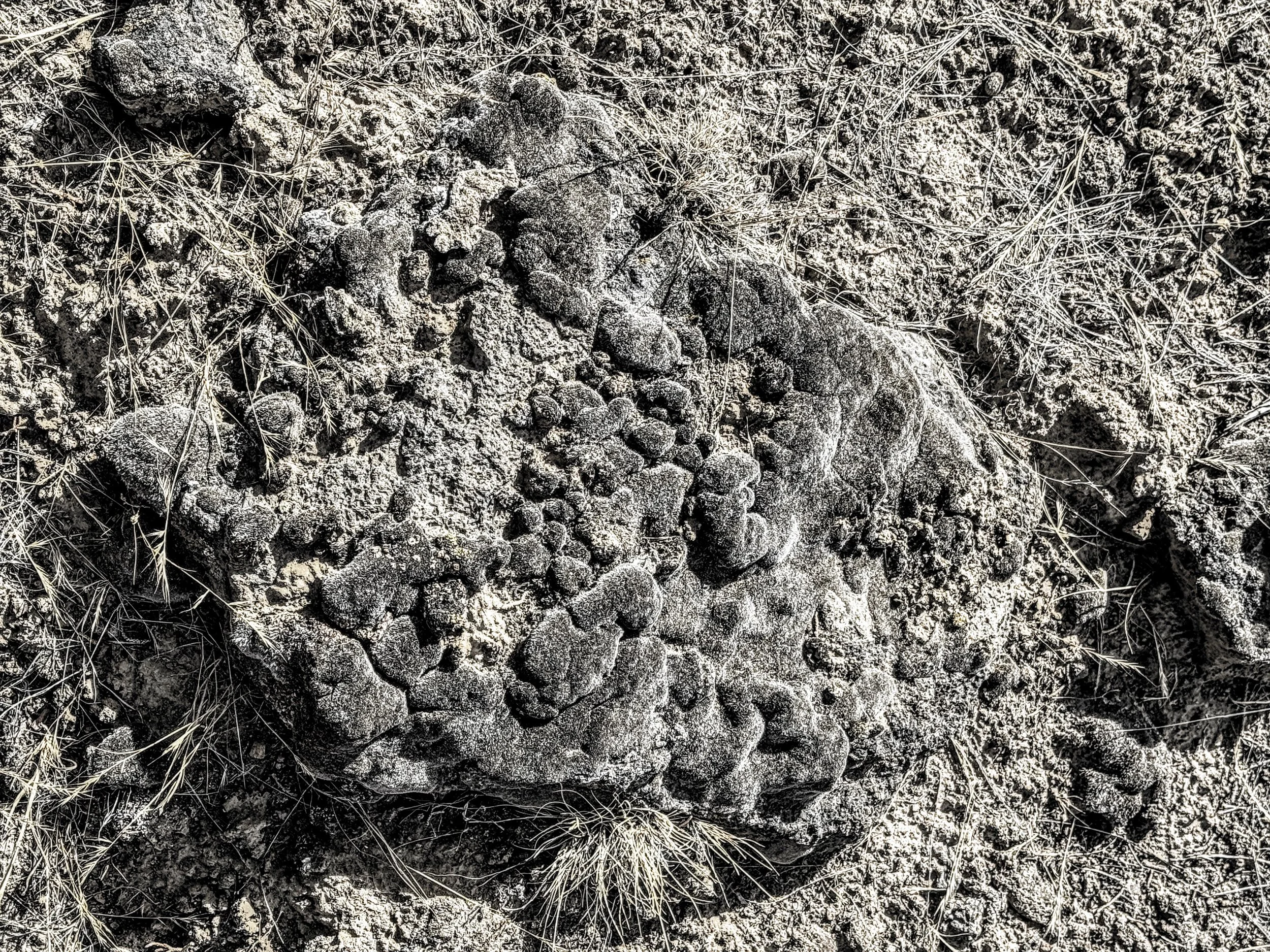
Basalt with blackish-gray fuzzy moss on the pumice layer with native grasses sprouting randomly. Old-growth juniper woodlands. Central Oregon. June 2026.
——
II - AIRBORNE
What I learned from the ground began 7,700 years ago. When Mount Mazama erupted, it imploded to create Crater Lake (forming the deepest inland lake in North America), and its contents drifted and coated 24 cubic miles and hundreds of miles of the PNW in a pumice layer.
We stood on the Mazama Soil Province: a coarse, pale, almost lunar-like material with textures but no rich loam for vegetable gardens. What was below my feet was an aeolian deposit. The ground literally landed here. The wind brought it and said, " Stay here until I move you again.”
The pumice is the gauntlet, a landscape basically made of volcanic glass, and what grows here tolerates low fertility, rapid drainage, and thermal extremes at the surface. And whatever can survive in such conditions becomes the high desert ecosystem. What made it through was what was around us.
This private property preserve hadn’t been touched by humans since the 1930s. No recreating, no flagging, no government edicts. The only apparent evidence of human interference was a portion of overgrazed land by sheep, and in 1915, the homesteaders dug a channel to capture water. The channel was deep to chest high back in its original state. Over the last almost 100 years, the wind has moved the soil, leaving the channel to appear as a long divot, maybe six inches lower than its surroundings.
“Soil moves,” the forester said. “And another rain will come; the wind will come and cover up our footprints.”
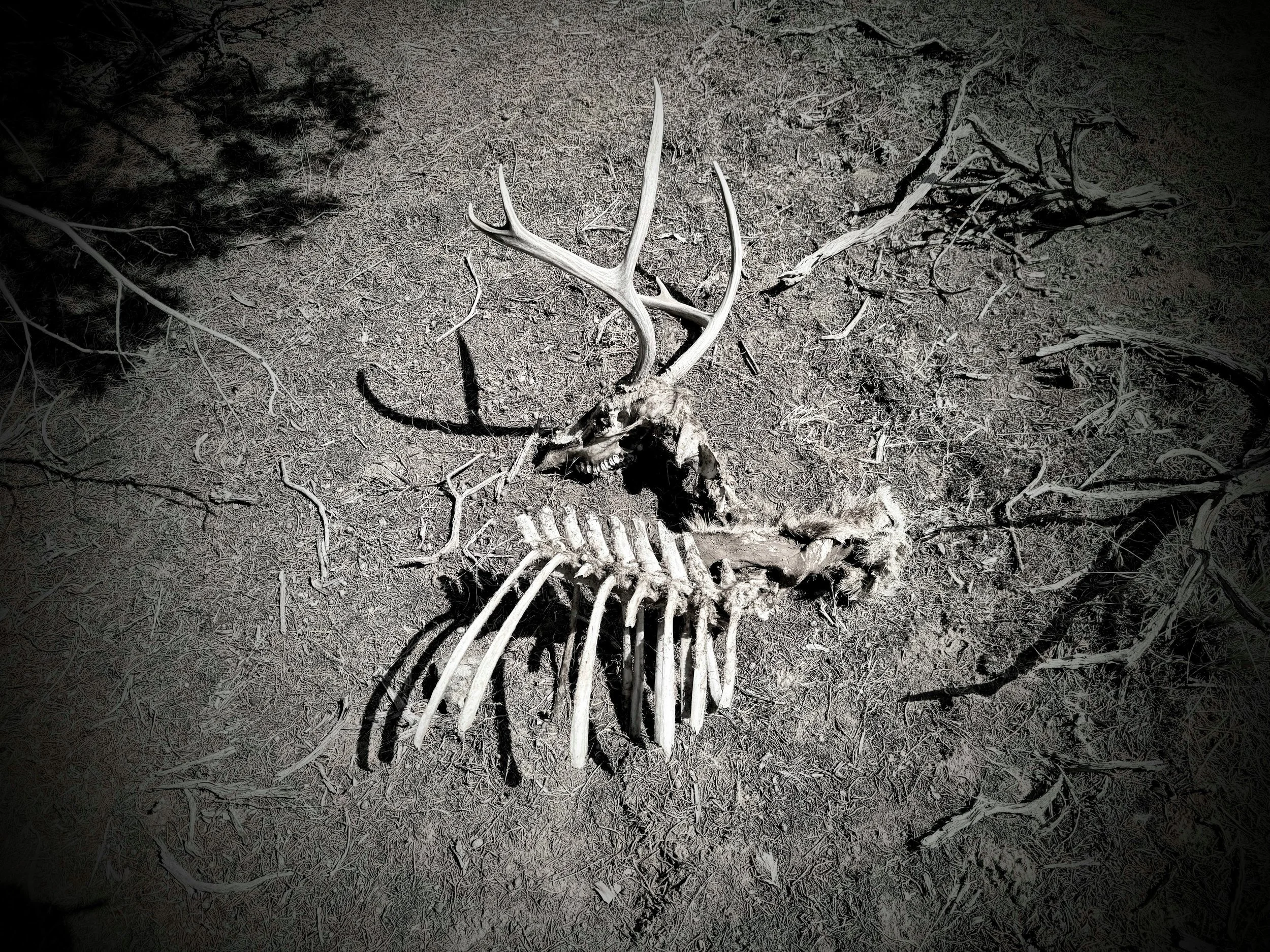
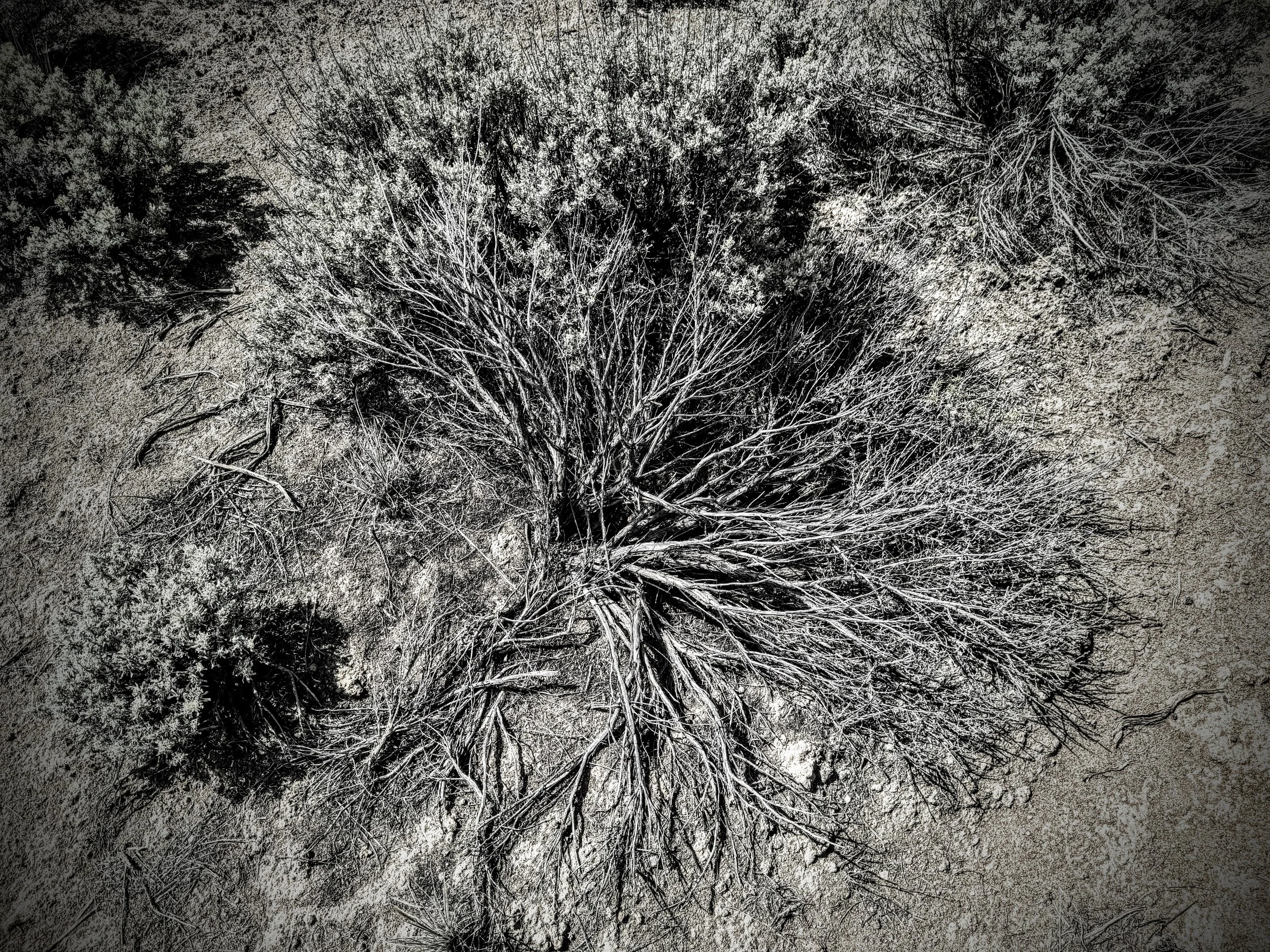
Caption: (left) Six-point buck skeleton with the skull and ribcage still largely articulated and in rough anatomical position relative to each other. The spine connected them, and ribs were still attached. Bones were not scattered. (Right) Partial skeleton of a woody shrub. Old-growth juniper woodlands. Central Oregon. June 2026.
——
BONUS CONTENT! My Theory on the SCAT…
A mountain lion killed the six-point buck. Dragged it to a lower-elevation area on the 40-acre preserve, hid it under a juniper with a wide canopy. Fed on it. The carcass appeared relatively confined to one spot, and the skeleton retained its basic form. A tawny fur patch near the shoulder remained. Mountain lions feed on the hindquarters and thoracic cavity first, which may explain the missing rear legs and pelvis; the head, antlers, and rib cage remain intact. Then a black bear came along to feed on this substantial kill, leaving a large scat pile that doesn’t resemble wolf, mountain lion, coyote, or any smaller creature’s waste. I suspect the black bear fed on forbs and the leftover buck before leaving a little note on the land about his co-existence.