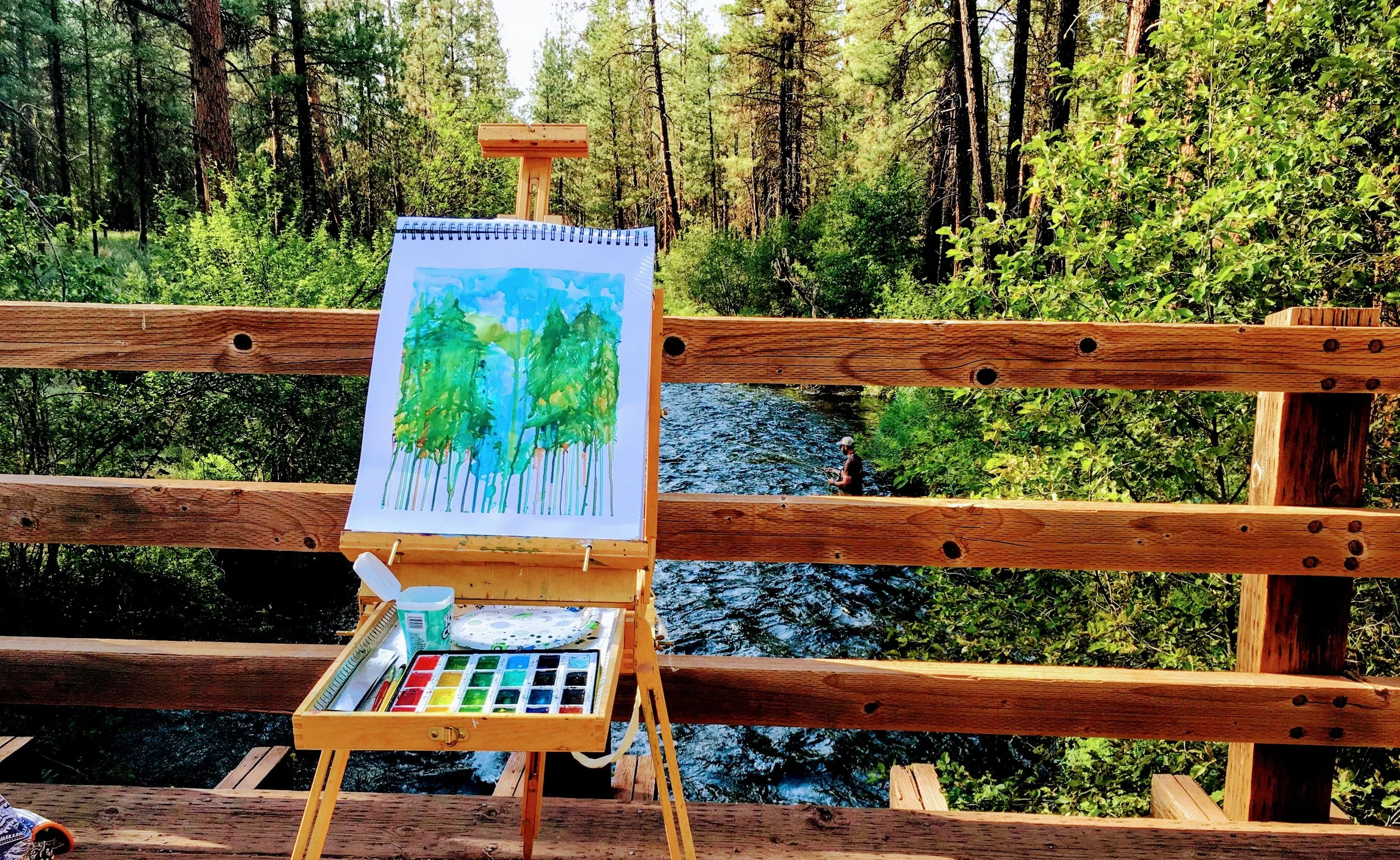
Plein air watercolor afternoon for me. PNW | circa 2018.
A boy paused his football game to watch me as I sat drawing at the park. He settled beside me on the blanket and cupped his chin in his hand. He quietly observed my Micron pen sketching a tree in my ever-present journal.
From across the park, his dad yelled at him to get their ball and to get going!
All these years later, I wonder about him sometimes because, like many people, I stopped drawing during adolescence. Cartoonist and art professor (UW-Madison) Lynda Barry said most people stop drawing between ages five and ten because realism and judgment shut down the impulse to create.
For me, art faded when sports and friends took precedence. Around seventeen, I rediscovered drawing, specifically sketching diagrams from science textbooks. What ensued was a constant tennis match of observation—break the figure into lines and determine how they intersected from brain to hand to paper. Back-and-forth, back-and-forth, I swiveled my head into the night under a nightstand light.
Buying a fresh sketchbook and diving back into drawing has an awkward period: lines feel hesitant, then begin to feel familiar again. It's never too late to come back to drawing or to start for the first time.
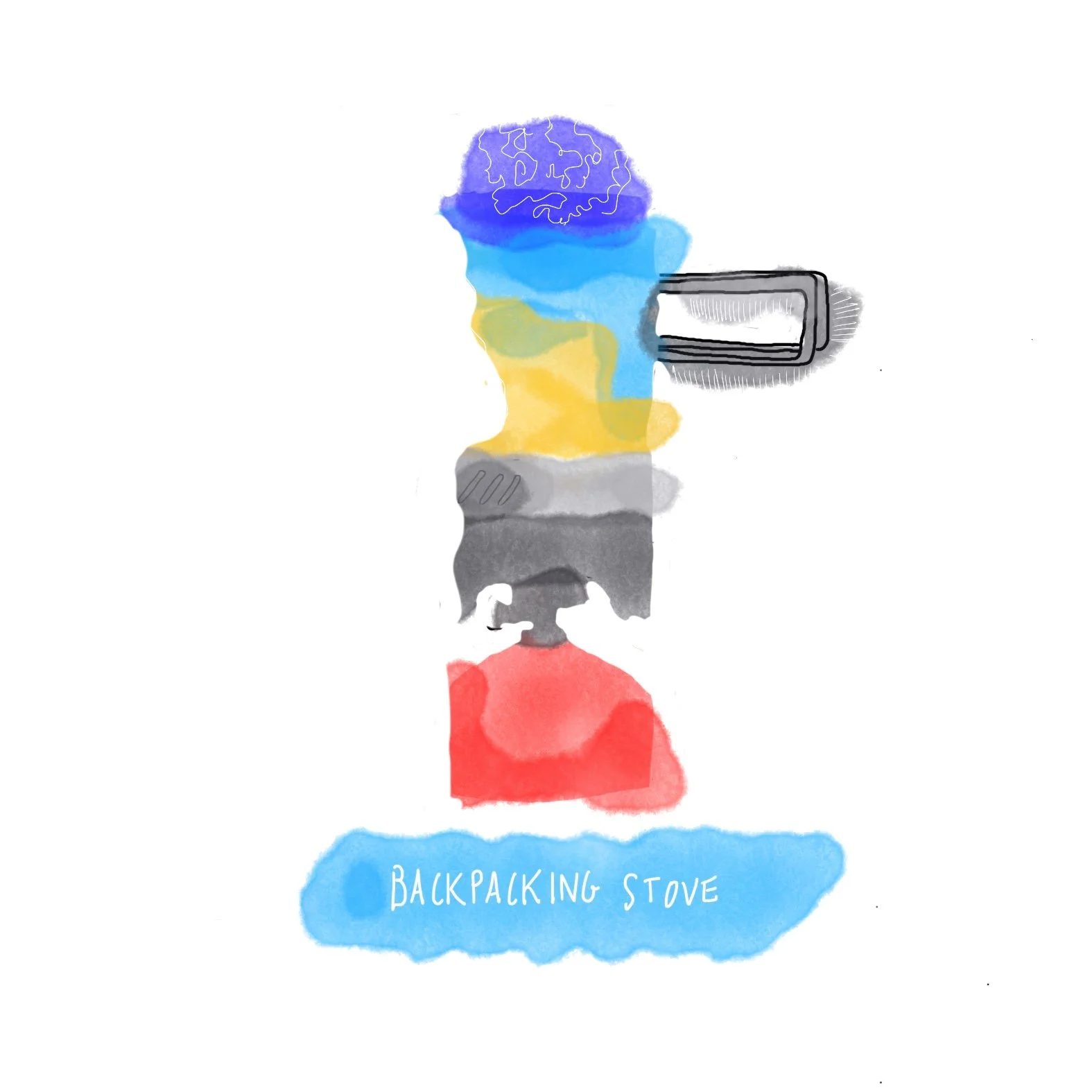
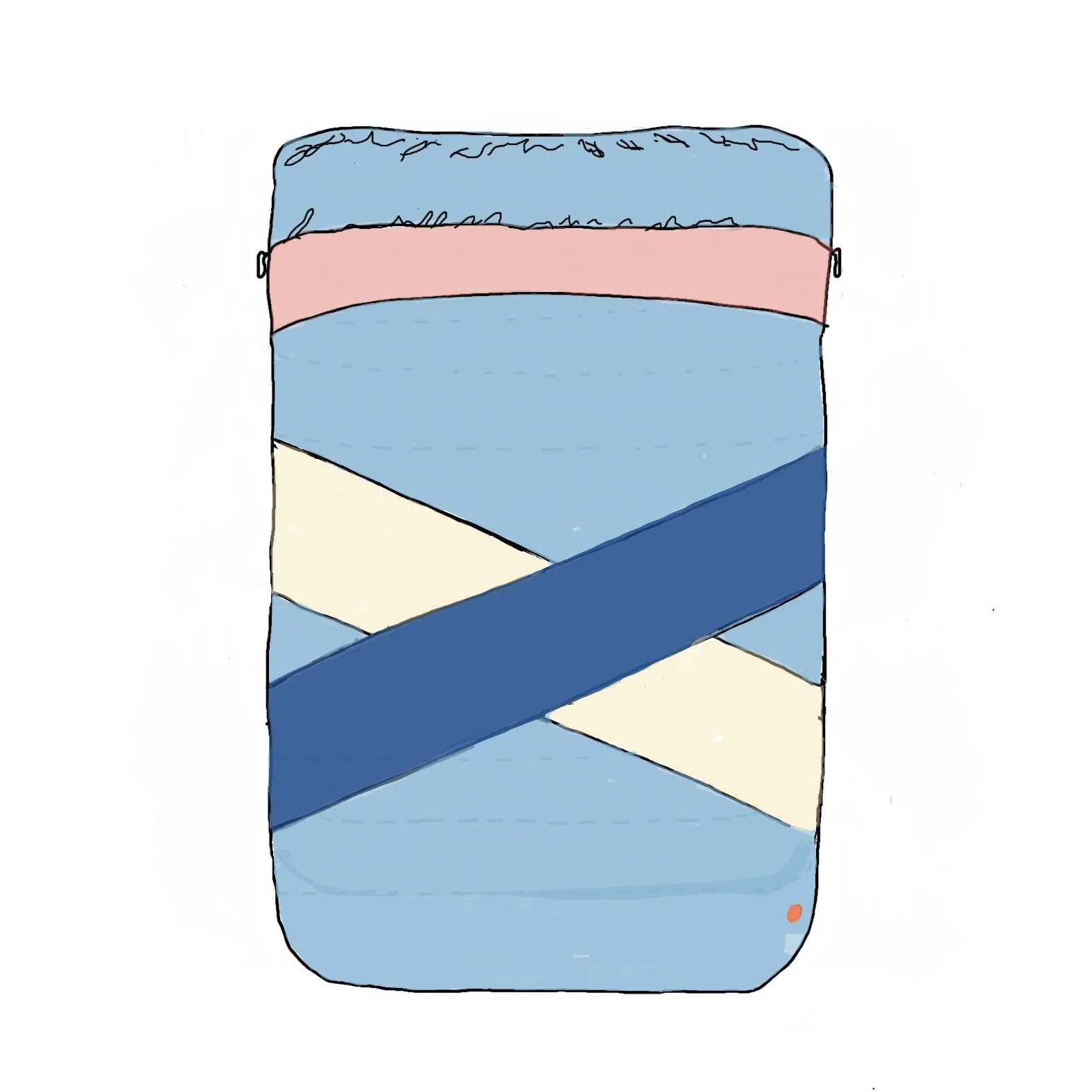
Little renderings from my backpacking and camping inventory. 2026
______
Barry emphasized that drawing is less about talent and more about the tactile focus on what comes to the hand. Drawing is just a series of lines. Don’t be afraid of the line. It can go any way on any substrate. Drawing is a human language, and anyone can do it.
Observation vs. Memory vs. Imagination
If you want to connect with your creative side (and of course you do; it has cognitive benefits!?!), try a simple exercise.
Set a timer for two minutes for each phase of “seeing”. Ground rules: Sketch without judgment (it will be hard to train yourself out of an inner critic, but try).
1. Take a minute to look at anything nearby. Draw it from observation
2. Put the object away or look away. Now draw it from memory.
3. Lastly, use your imagination to draw it, but spin it into some element of imaginative willpower, no matter how silly, unusual, or realistic it may become.
Let your lines wander and fill the page however you like. The goal is to see and invent.
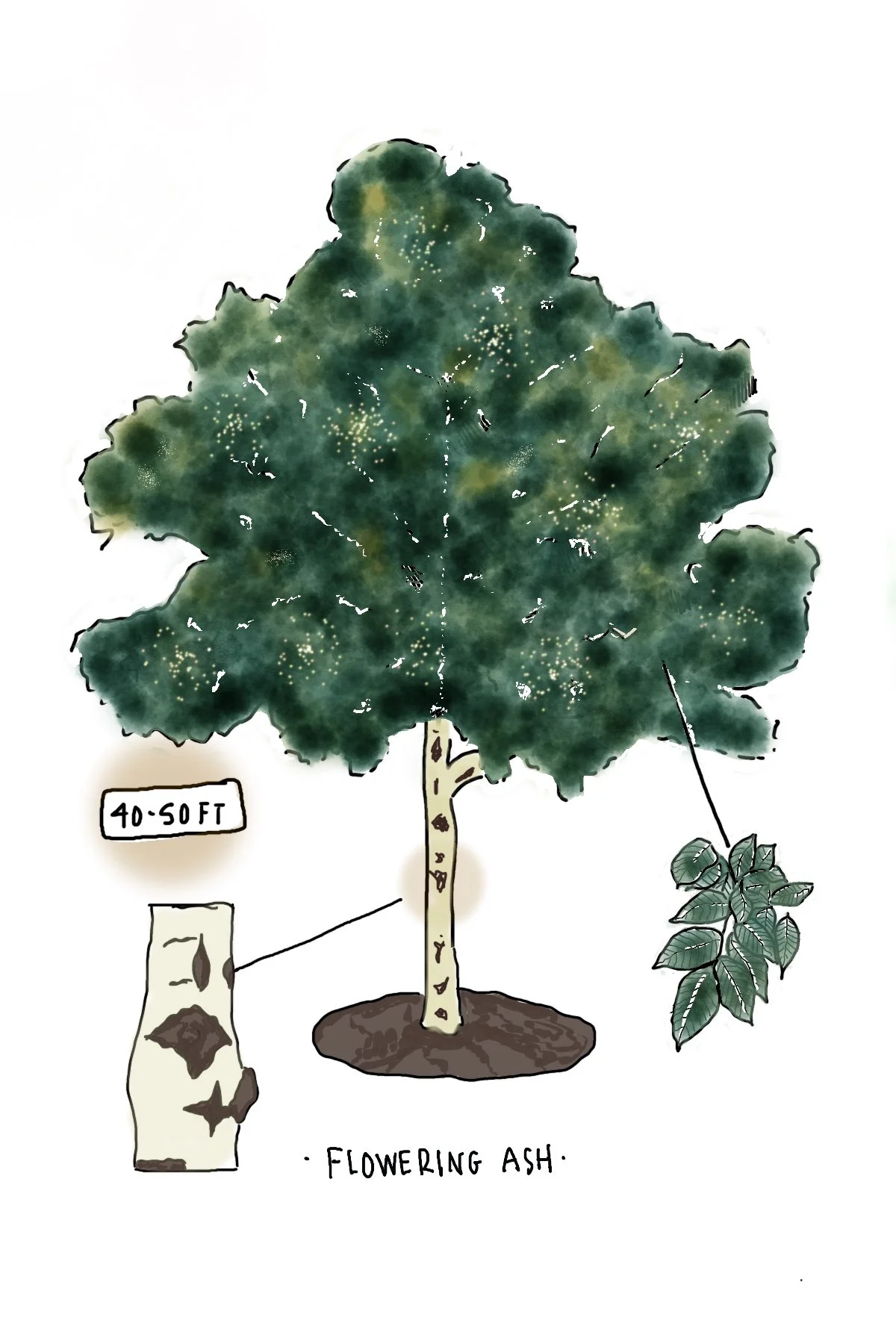
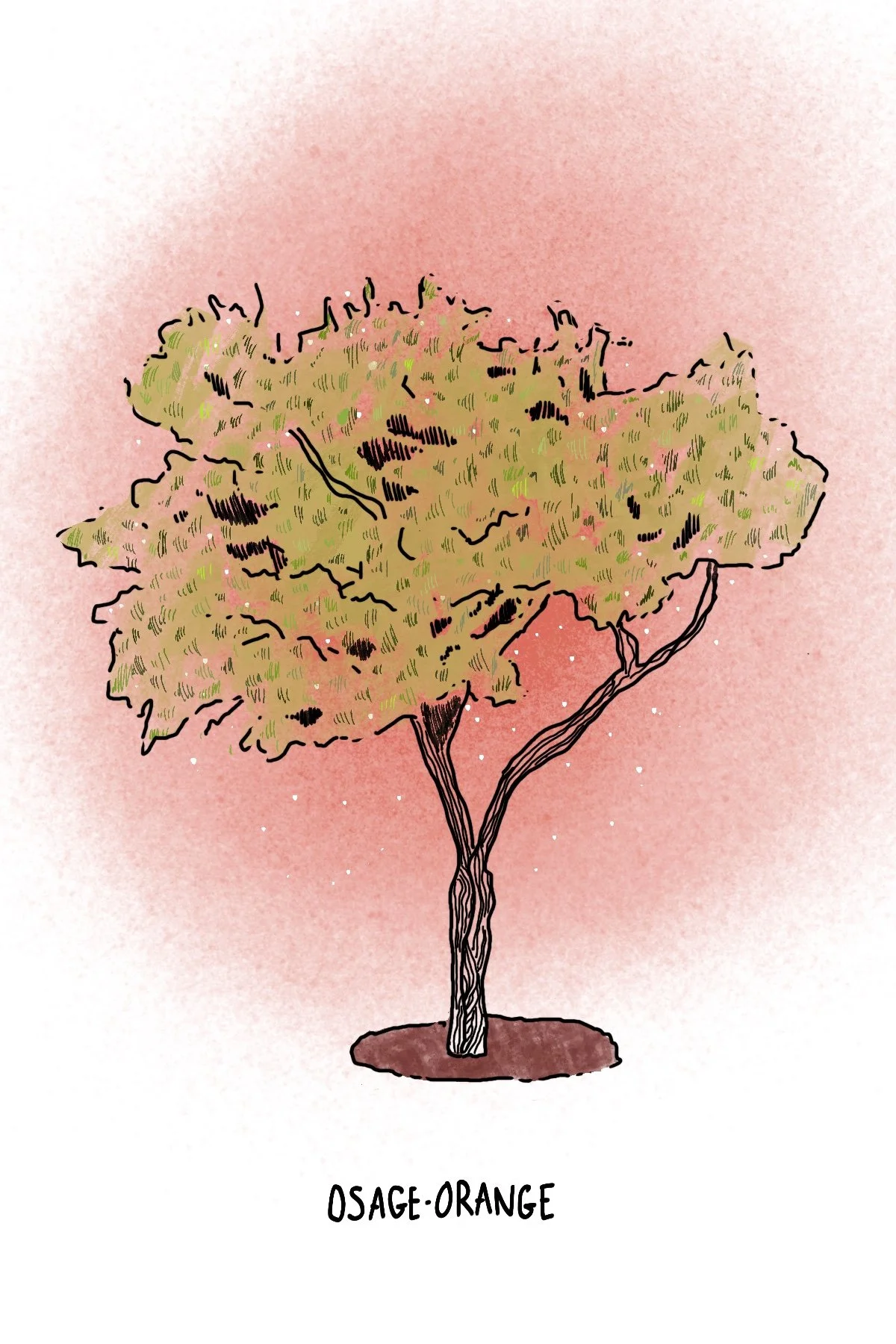
(left) Flowering ash; (right) Osage orange at sunrise. 2025
______
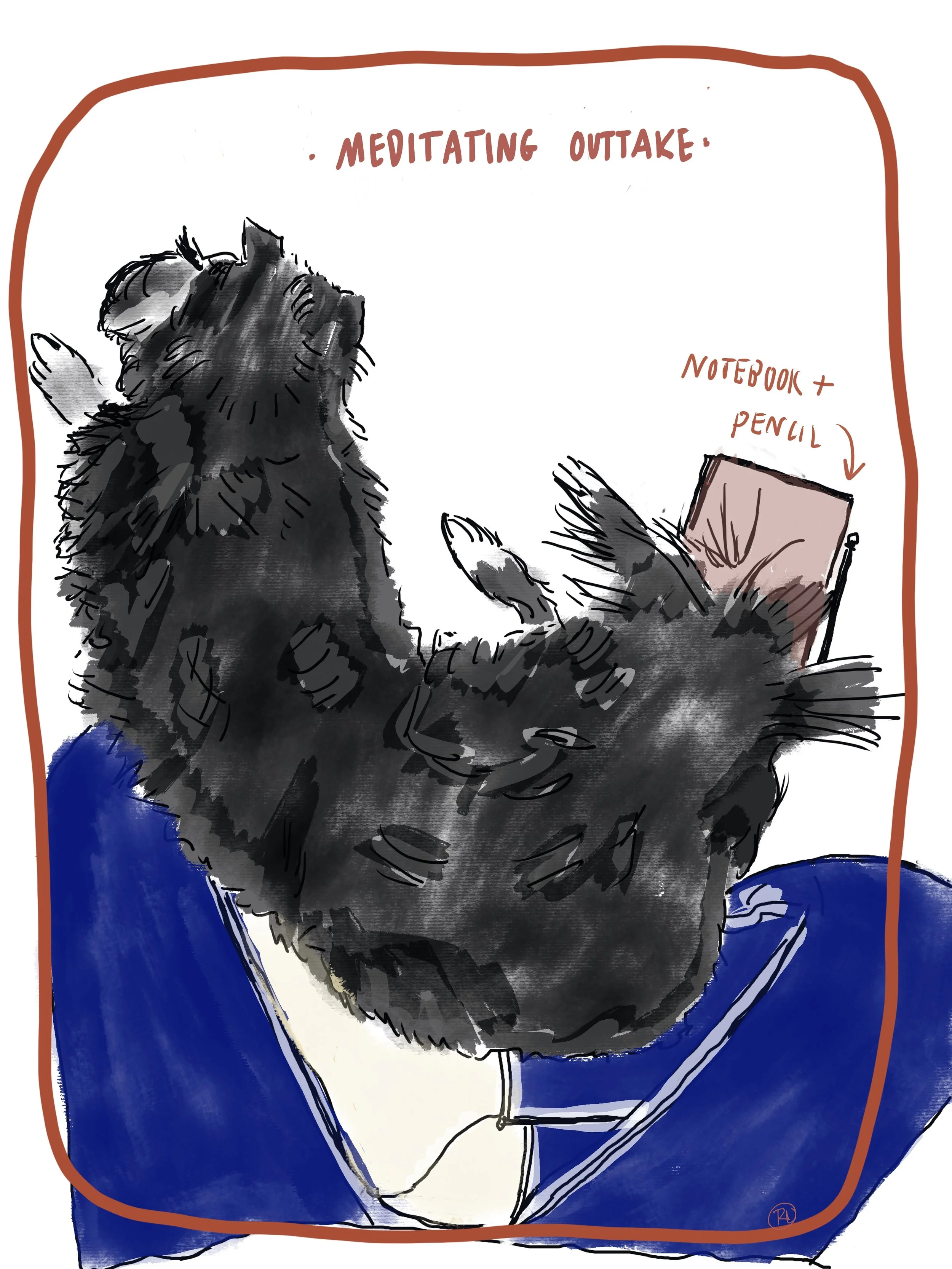
Meditation time and my dog joins me.
Drawing in field notebooks and journals has long helped me manage stress and process the world. You don’t need fancy materials. Barry encourages her students to use whatever is at hand, like a pad and ballpoint pen. From there, just start sketching. I carry a journal and a small portable watercolor set, ready for inspiration.
Drawing is one of those great brain activities. It activates spatial awareness, hand-eye coordination, and visual regions. The cross-network activation affects memory (i.e., drawing encodes in memory). The more you draw, the more attention you pay to details. And the world is a multitude of details. Slow down and notice life one line at a time.
Sources of interest:
Barry, Lynda. What It Is. Montreal, Canada: Drawn & Quarterly, 2024. Print. ISBN 9781770467378.
Internet archive version.
Frances J. Griffith, Verner P. Bingman. Drawing on the brain: An ALE meta-analysis of functional brain activation during drawing. The Arts in Psychotherapy, Volume 71, 2020, 101690, ISSN 0197-4556, https://doi.org/10.1016/j.aip.2020.101690.
Jeffrey S. Katz, Martha R. Forloines, Lily R. Strassberg, Barbara Bondy. Observational drawing in the brain: A longitudinal exploratory fMRI study. Neuropsychologia, Volume 160, 2021, 107960, SSN 0028-3932, https://doi.org/10.1016/j.neuropsychologia.2021.107960
Patrick Downing. “Neuroaesthetics and the brain chemistry of drawing.” Art UK. 13-11-2024
Irida Tsevreni. Pedagogical implementations of nature journaling in connecting with the natural world: A scoping review of thinking, skills, and creativity. Volume 62, Part A, 2026, 102249, ISSN 1871-187. https://doi.org/10.1016/j.tsc.2026.102249.