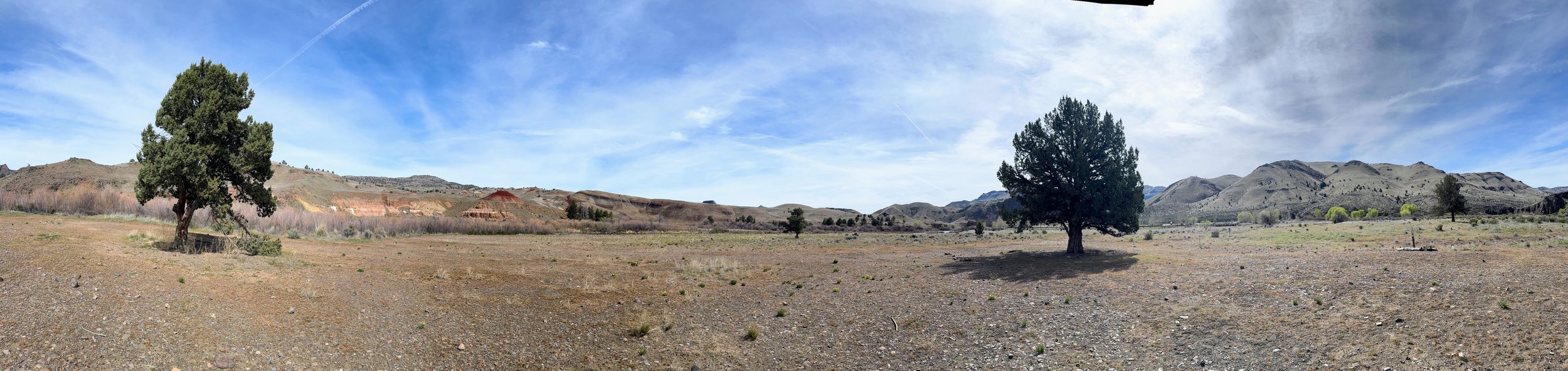
Standing in the middle of a dry riverbank. John Day River. Eastern Oregon. 2026
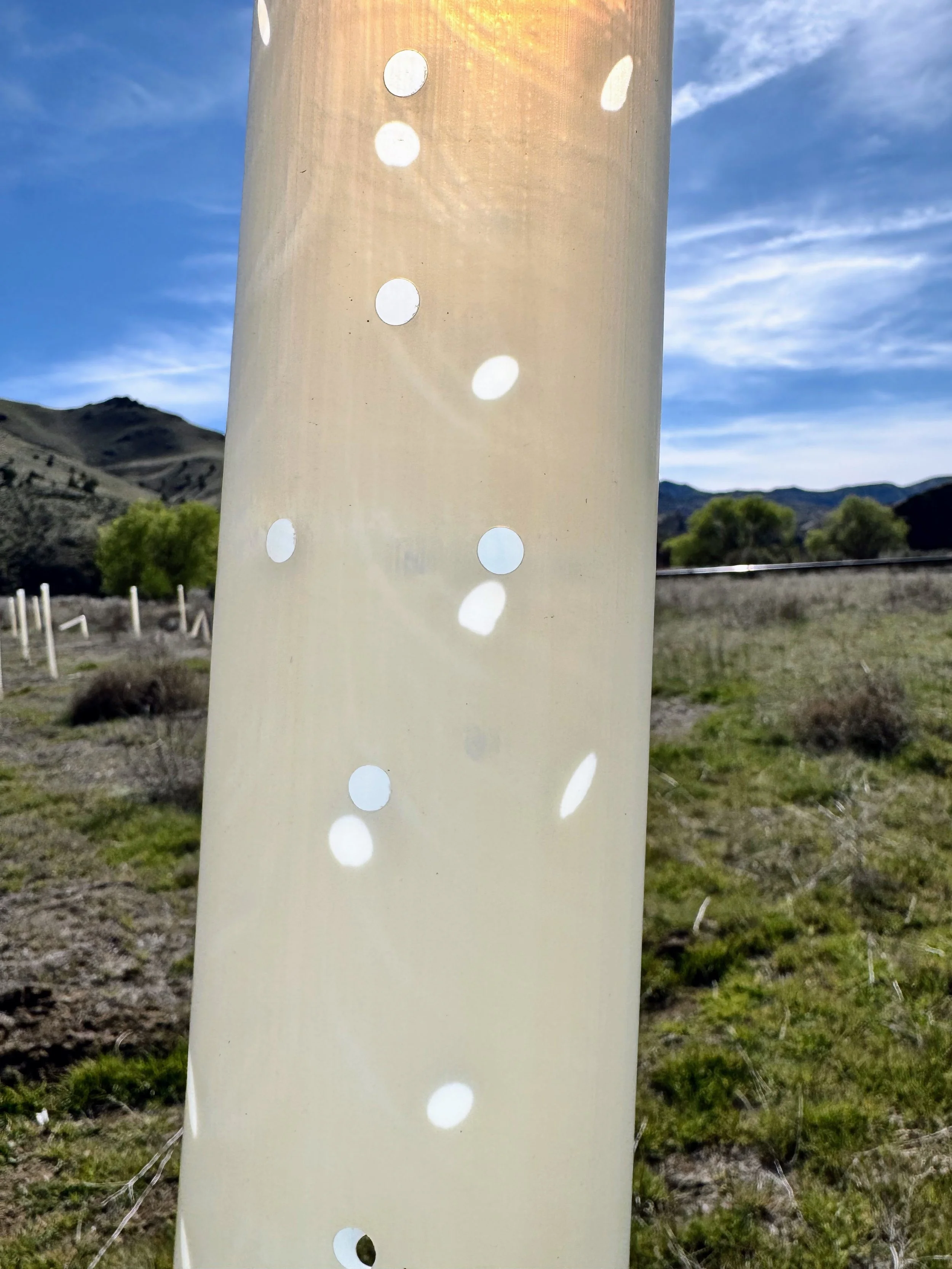
Close-up of plastic sleeve, with aerated holes. Eastern Oregon. 2026
Rows of long plastic sleeves were zip-tied to wooden stakes spaced every ten feet across the center of the BLM campground. The sleeves, presumed to protect planted saplings, hinted at a restoration effort. Yet so many sleeves were angled, broken, and discarded across the flat.
There were no posted signs to explain the experiment. As I walked along the plastic grove, kicking up dust with my trail shoes, the work of Hope Jahren and Suzanne Simard came to mind; Jahren’s studies on plant resilience and Simard’s groundbreaking research into the hidden networks that connect trees beneath the soil seemed especially relevant when I looked at the struggling saplings.
After exploring, we set up a camp alongside the John Day River. The dogs sniffed and searched for shade while I read Edward Abbey’s Desert Solitaire: A Season in the Wilderness. Abbey’s sharp observations of human intervention in wild places and his defense of untouched lands felt as urgent now as ever, deeply resonating with the scene unfolding around me.
Later, as the evening settled in, we made dinner in the Jet Boil skillet and shared gummy candy for dessert. We went to bed before people in the city even left for a restaurant. Overnight, the campground was mostly quiet, except at one point when I heard animals walking on the gravel outside the tent. Peace ended with loud squabbling turkeys and Mallards honking in constant Doppler effect.
At sunrise, we ate instant blueberry oatmeal and drank black coffee while discussing our plans for the day. We favored the no-plan-as-a-plan approach—either settling on a single destination or letting ourselves wander the dirt roads. In this remote area, printed maps were essential.
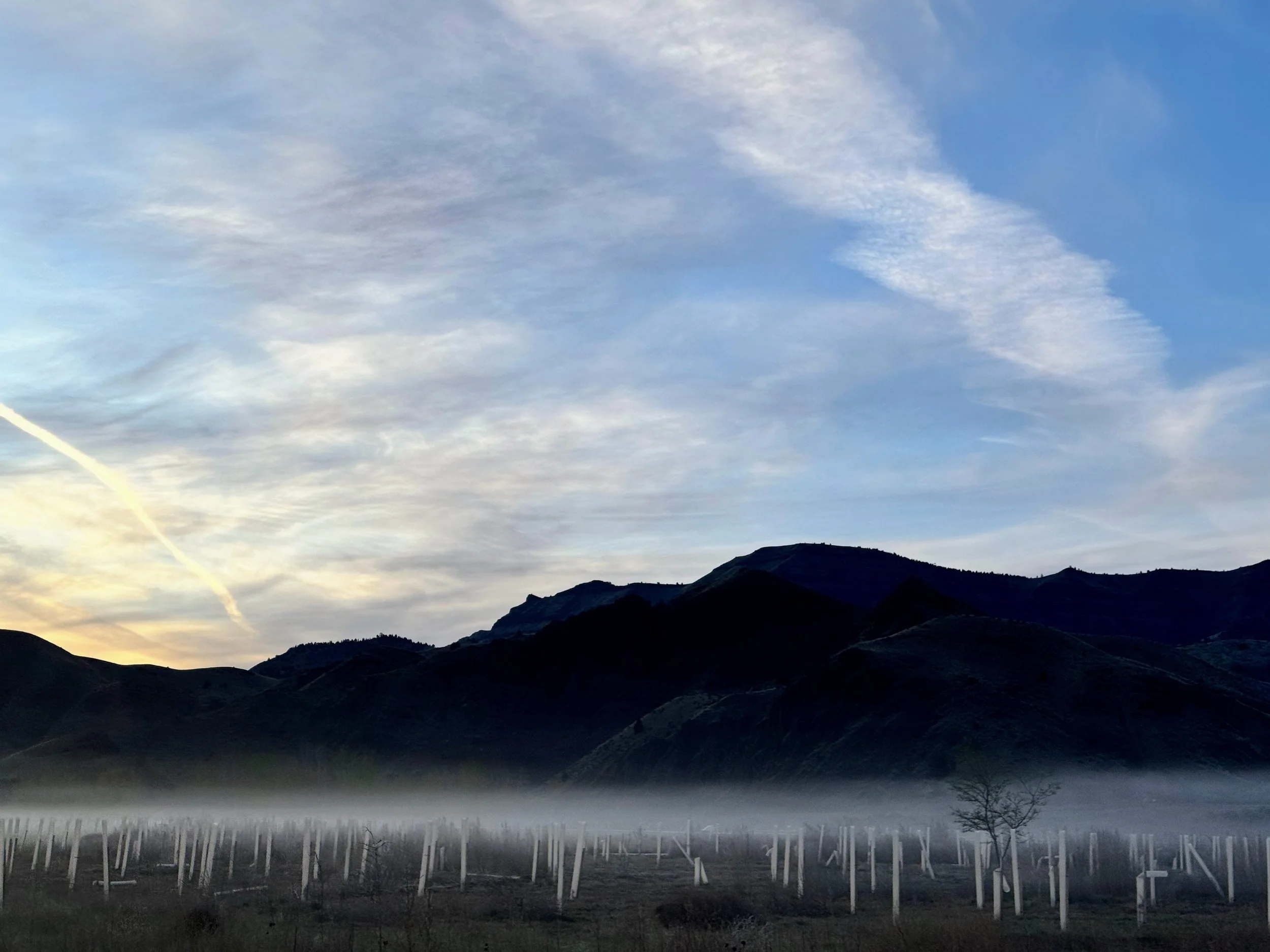
Dawn’s radiation fog skims the tops of the plastic-sleeved grove. John Day River. Eastern Oregon. 2026
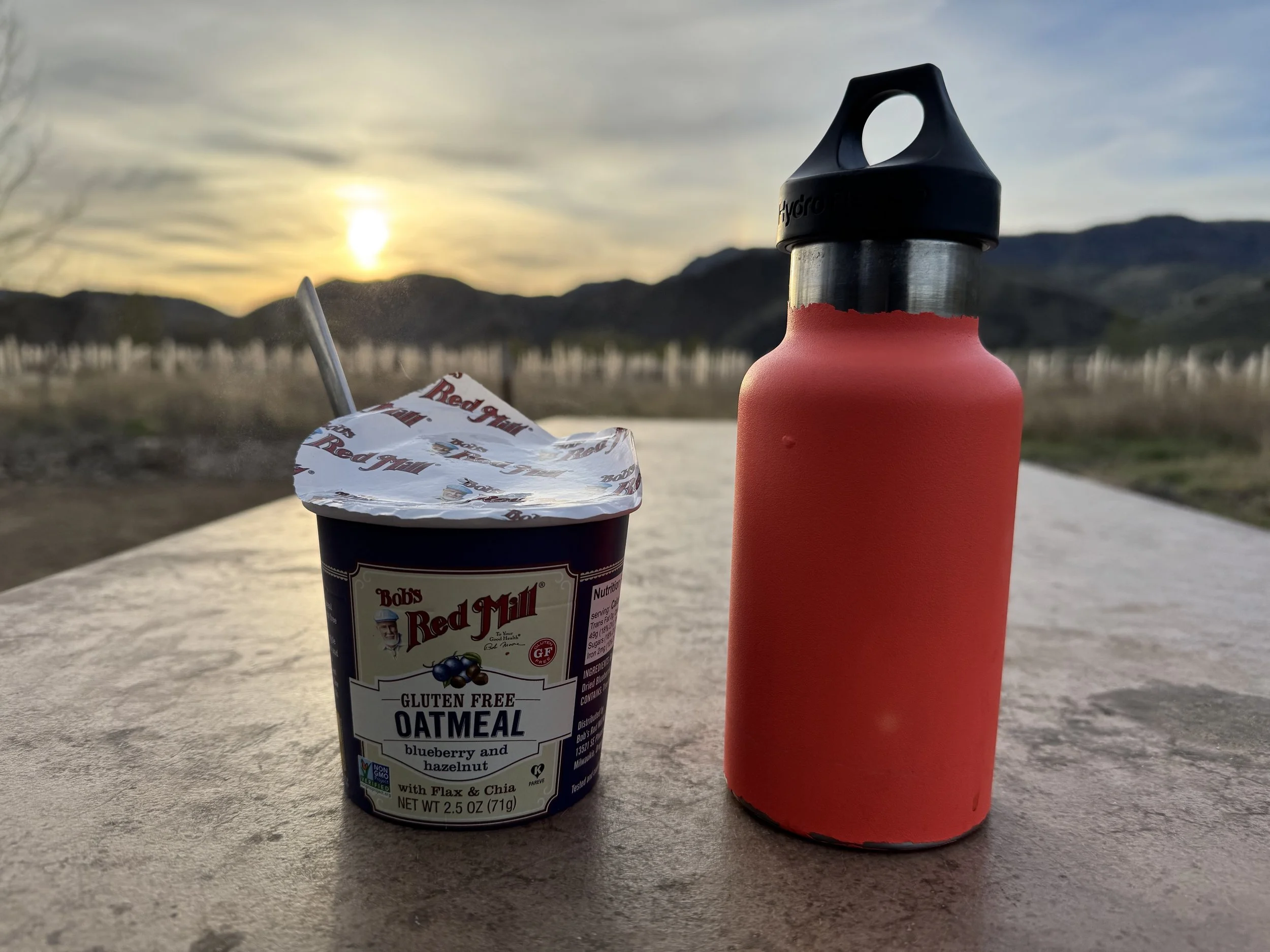
Solid, outdoorsy, adventure breakfast of instant blueberry oatmeal and a thermos of black coffee. 2026, John Day River. Eastern Oregon. 2026
Soon after breakfast, a large pickup truck slowed nearby, and two older women got out and walked into the plastic-sleeved grove. "Here’s my chance," I said. "Of course it is," he replied.
I approached the women and went into my roving reporter mode. The woman with deep time and sunshine on her face wore an oversized blue Cabela’s shirt, shorts, and Keen sandals. She had been one of the laborers in the grove. This was her first time back since they planted the trees more than a year ago.
The BLM bought all the supplies for planting 3,000 cottonwood trees over 20 acres. The cottonwood grove plan was to offer wildlife food and cover. The Oregon Hunters Association planted trees for over two days. The BLM planned to flood the land to soak it. But it appeared that it had never happened. Without that critical step, the dry ground offered no help to the saplings.
As she spoke about her disappointment, seeing the failed saplings up close, left me too dismayed. I suspected this was the federal budget cuts and a political administration’s efforts to slash an environmental pursuit for preservation and sustainability. Even a modest restoration effort here had its luck dried out under the scathing high desert sun.
The plastic sleeves were bent and battered by the weather. She said we should be able to hear the river rushing at this time of year; it should be breaking the bank. The river could have been back-up water to the grove, but even a dry winter didn’t give it up.
"This experiment failed," she said. "Now we need cleanup labor."
The project's failure lingered with me. Even with the best intentions, things fail, especially when humans try to tend a landscape on their timetable rather than nature’s. Modern landscape is shaped by time, climate, and bureaucracy. Sometimes the land answers in ways we do not choose. My hope, though, is that in another season, a few cottonwoods will take.
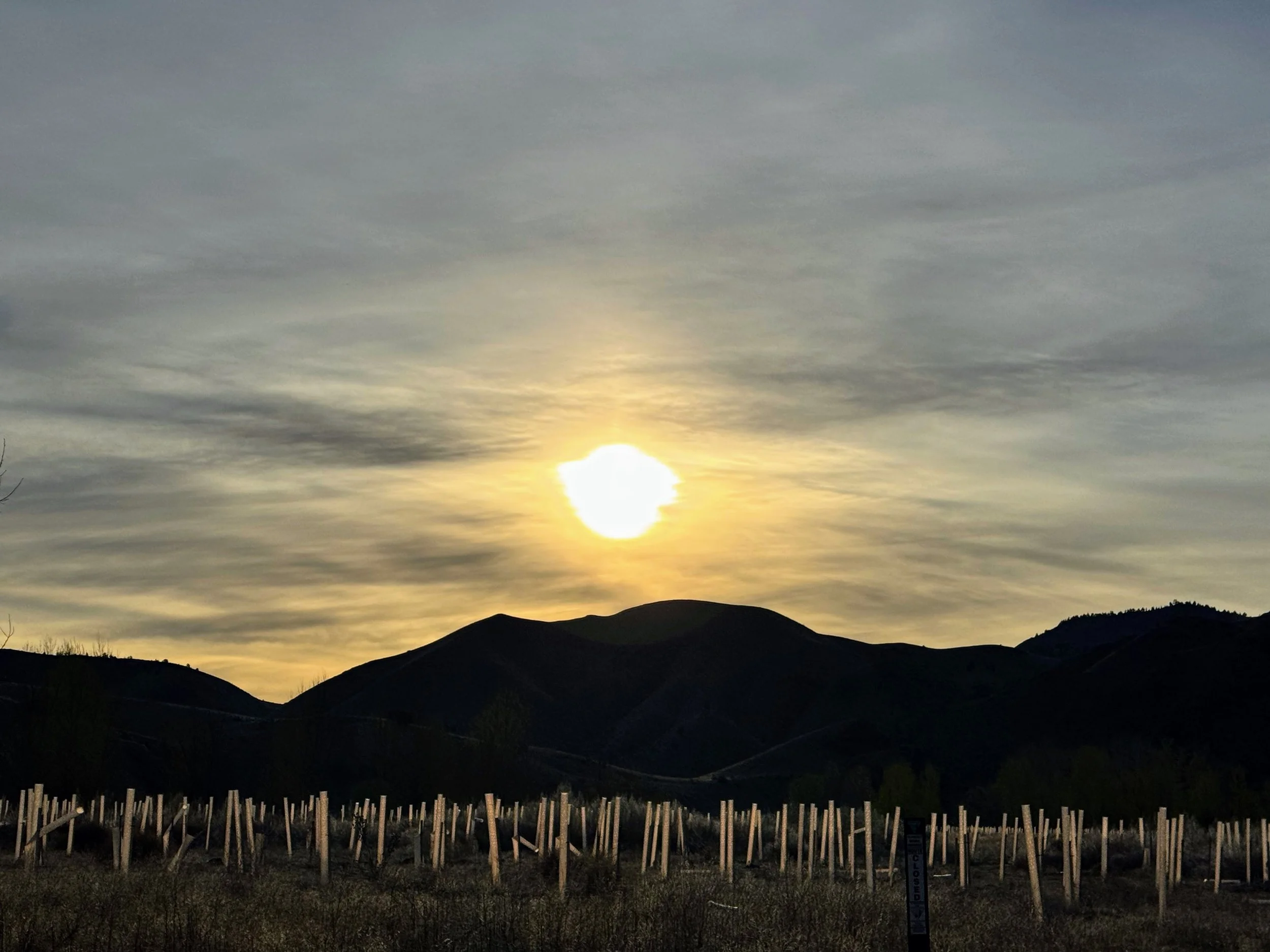
Sunrise illuminated the plastic-sleeved grove. John Day River. Eastern Oregon. 2026.