Dusk turned the forest shapes blue-gray. I read under the duvet by a small yellow light, the window cracked open. The voice returned from the distance: my ghost bird was back. It sounded like ancestral weeping in an attic—haunting and nameless. It rarely visited, never in daylight, belonging only to those transitional times of day.
The song was a strange, high-pitched, ghostly warble—a whispery cackle, lasting about six seconds.
This is my poor-quality audio sample; you’re listening for the distant bird. I was too far away with a poor microphone. There is a louder sample at the Cornell Lab, but it’s not quite the beautiful sound I hear from a distance.
I went outside and started the audio identifier. The sound was distant, but it broke through the road noise. Audio identified it as Wilson’s snipe. As if a child were learning a word for the first time, I said it out loud. Repeated it. The birdsong had an identity. Identity means information, and information means creating a narrative in my head. It lived here; I lived here. We were natural neighbors.
And what I found out was a mechanical engineer’s dream: its song was not a vocalization at all, but rather the sound emanated from its tail feathers during a dive-bombing flight at about 25 to 60 miles per hour. The sound was the flirtiest attempt to woo a mate and show territorial might, called winnowing.
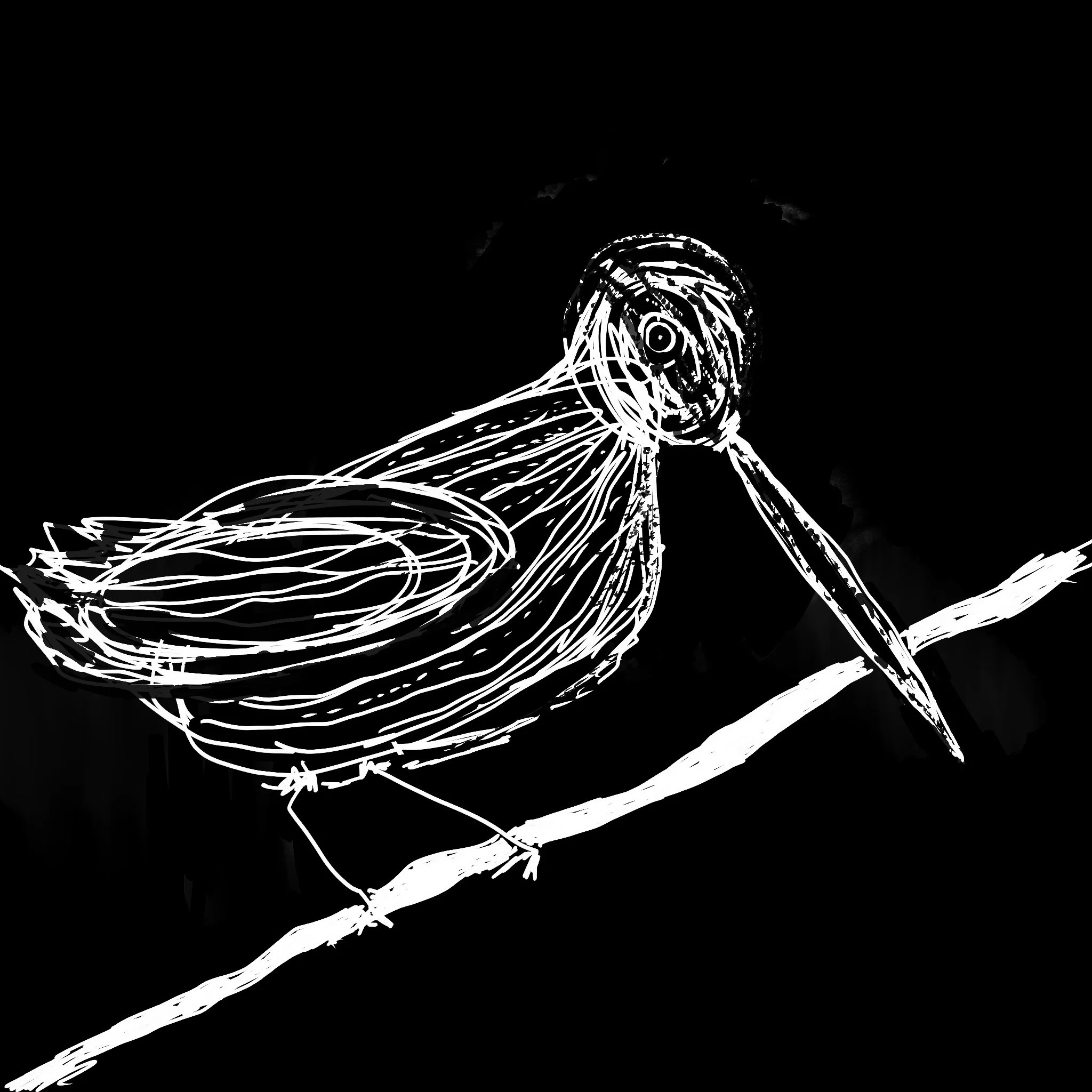
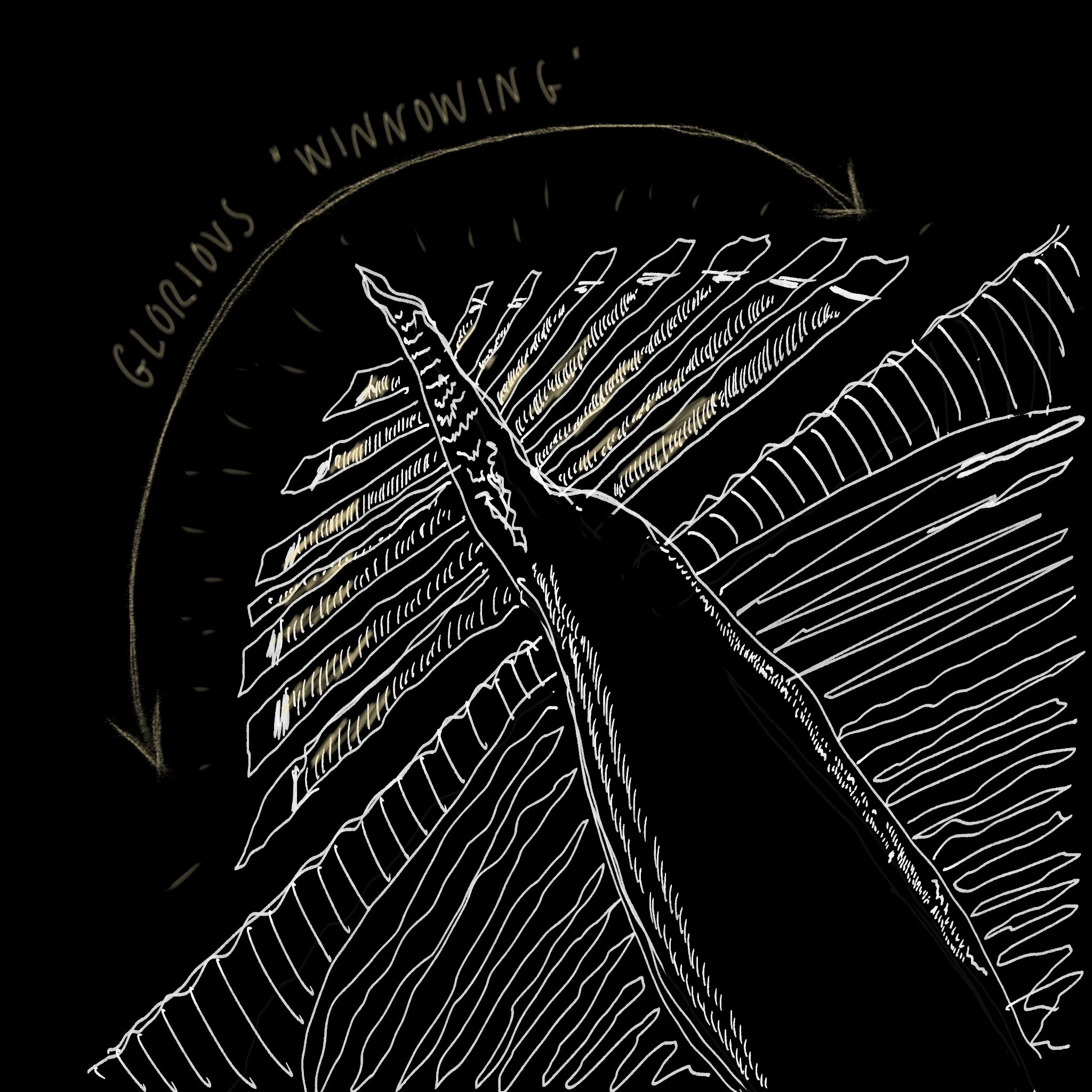
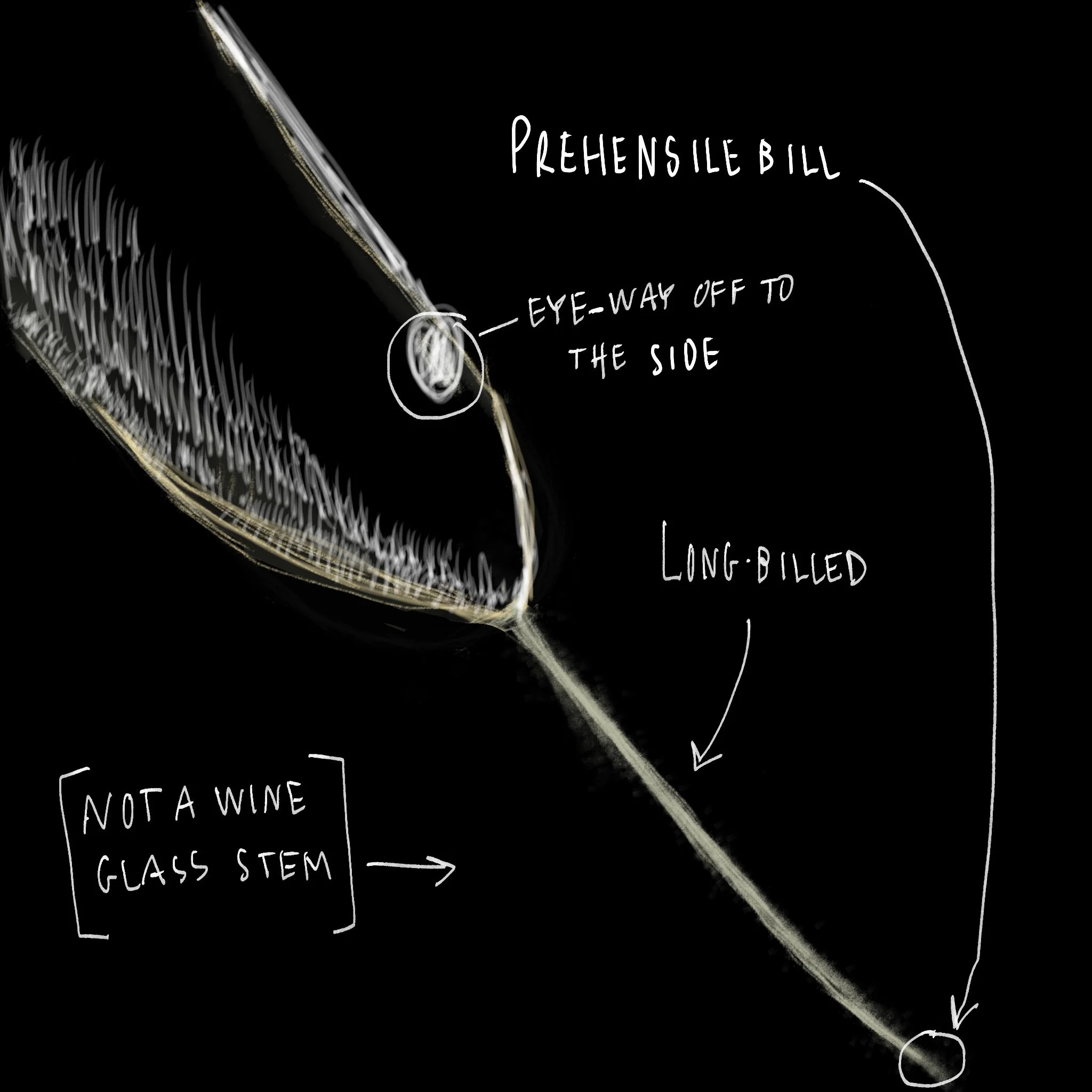
My sketches of the ghost bird, Wilson’s snipe: whole bird, tail feathers in winnowing dive-bomb, and its prehensile bill.
I have never seen this elusive bird; I have only heard its occasional sound in the spring’s pre-dawn and dusk. Then it goes away or stops its winnowing.
I did my best to record Wilson’s snipe and convert the audio file into a spectrogram to examine all the environmental sounds at dusk, when diurnal sounds change guard and thermals shift. The Wilson’s snipe sound hid in the spectrogram’s pixelated blue zone among the forest’s ambience. The spectrogram resembled a layered cake: slices of rumbles, winds, and absorptions stacked from ground to sky.
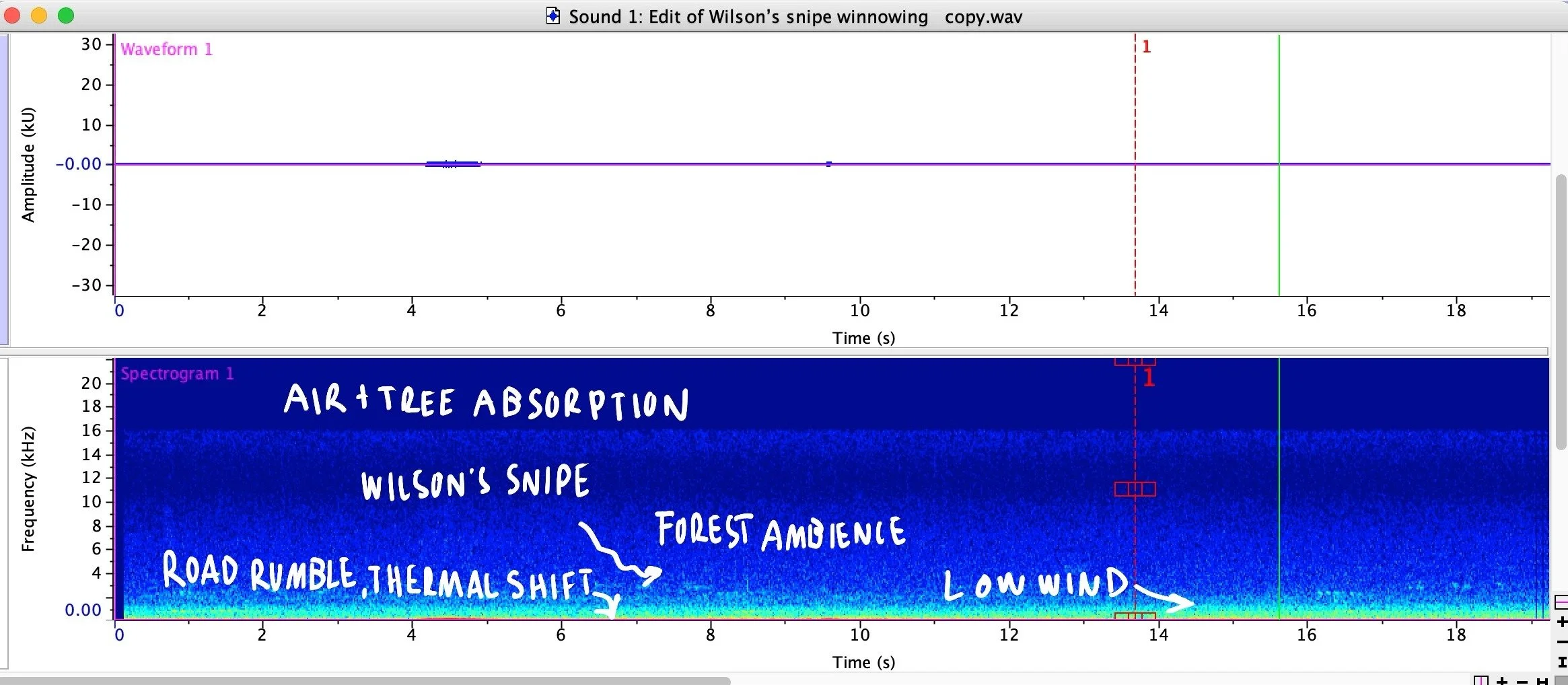
This is the spectrogram of the audio file showing what dusk “looks” like in sound.
Its winnowing reminded me of how nostalgia arrives sporadically, and in whiffs, when we least expect it.